
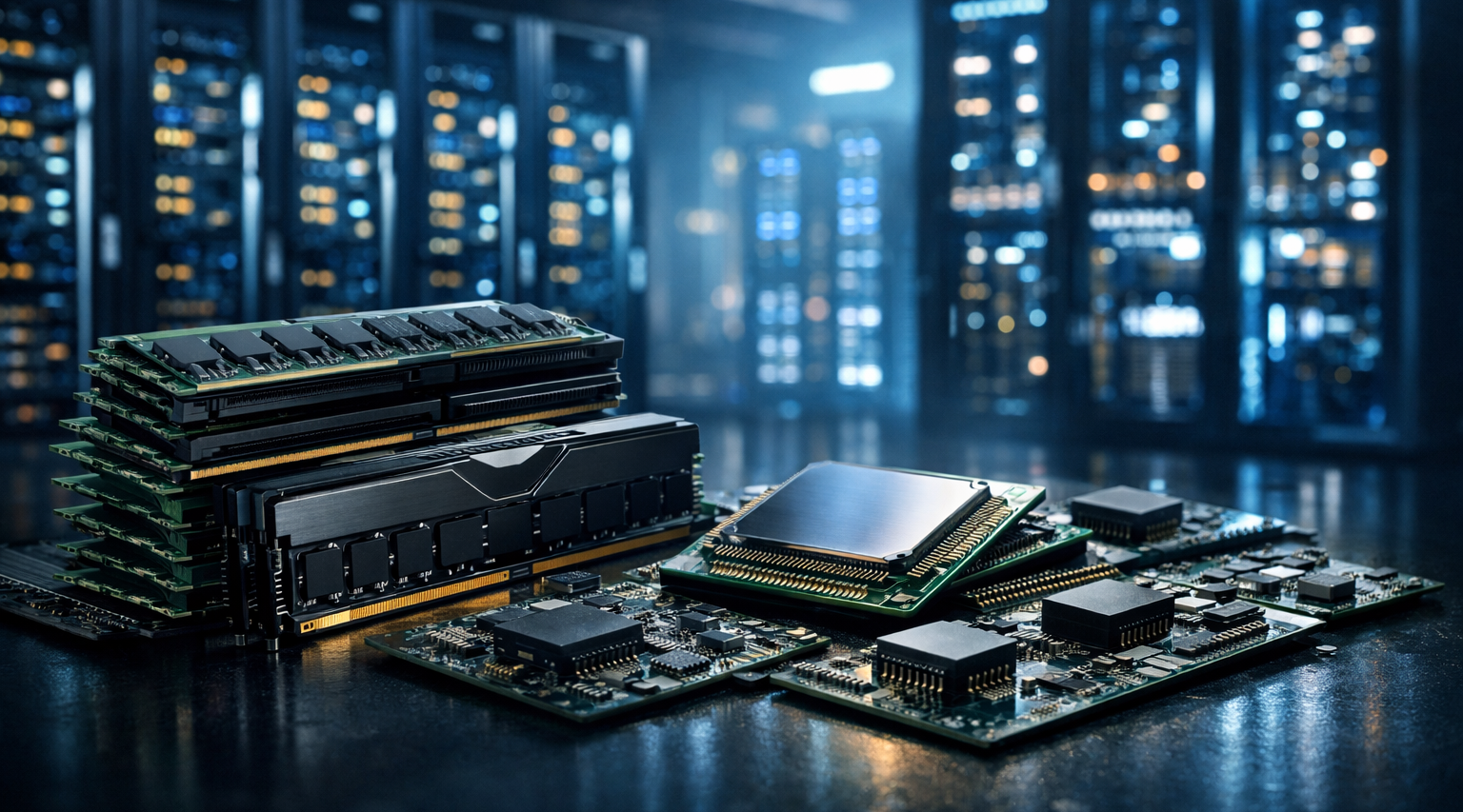
If you have recently tried to upgrade a PC, build a gaming rig, or even price a new laptop, you have probably asked the same question many buyers are asking right now: why are RAM and chips getting so expensive?
This is not a short-term retail fluctuation or a seasonal pricing trick. The global memory and semiconductor market is undergoing one of its most dramatic shifts in decades. Prices for DDR4, DDR5, and other memory components have surged sharply, and chip availability is becoming more selective. The causes lie deep within how the industry is prioritizing production, driven largely by artificial intelligence, data centers, and strategic manufacturing decisions.
The new reality of the memory market
Historically, RAM prices moved in cycles. Supply would increase, prices would fall, demand would rise, and the cycle would repeat. What makes the current situation different is that demand is no longer evenly distributed across consumer and enterprise markets.
Today, memory manufacturers are focusing on fewer customers who are buying at unprecedented volumes. These customers are not gamers or home PC builders; they are AI companies, hyperscale data centers, and cloud service providers.
This shift has changed everything.
AI infrastructure is consuming massive amounts of memory
The single biggest factor behind rising RAM prices is the explosive growth of artificial intelligence infrastructure. Training and running large AI models requires enormous quantities of high-speed memory. Unlike consumer PCs, AI servers are packed with ultra-high-capacity modules and specialized memory technologies such as High-Bandwidth Memory (HBM) and enterprise-grade DDR5.
Major memory producers like Samsung, SK Hynix, and Micron are dedicating a growing share of their production capacity to these high-margin enterprise products. Industry reports suggest that a significant percentage of global DRAM output is now reserved for large AI-related projects.
This creates a domino effect. When manufacturers prioritize AI and data center clients, fewer resources are left for consumer-grade memory. Even though DDR5 adoption is increasing in desktops and laptops, the supply available to retail and system builders is far more limited than demand.
DDR4 is becoming scarce instead of cheaper
Normally, older technology becomes cheaper over time. DDR4 is breaking that rule.
As the industry transitions toward DDR5, manufacturers have begun winding down DDR4 production lines. The goal is to free up capacity for newer memory and more profitable AI-focused products. However, millions of systems worldwide still rely on DDR4, including budget PCs, enterprise hardware, and legacy platforms.
The result is an unusual market condition. DDR4 demand remains strong, but supply is shrinking rapidly. System builders and businesses that still depend on DDR4 are racing to secure remaining stock, which pushes prices higher instead of lower. This is why many buyers are seeing DDR4 kits cost significantly more than they did just months ago.
Memory is no longer a “cheap” component
Not long ago, RAM was one of the most affordable parts of a PC build. A solid kit could be purchased without much impact on a budget. That has changed dramatically.
Prices for popular DDR5 kits have multiplied, and even modest DDR4 configurations are no longer considered inexpensive. This trend affects more than DIY builders. Laptop manufacturers, workstation vendors, and device makers all depend on the same memory supply chain.
Companies building preconfigured systems now face higher component costs, which eventually pass through to end customers. Even devices not traditionally associated with high-performance computing, such as tablets, single-board computers, and embedded systems, are feeling the pressure from rising memory costs.
Why this matters for performance and system planning
RAM is critical to system performance. It acts as the short-term workspace for the CPU, holding active data so tasks can run quickly and smoothly. As software becomes more demanding, memory requirements increase.
For gaming and professional workloads, faster and larger memory configurations directly impact frame rates, multitasking capability, and system stability. Modern games already push beyond 16GB in some scenarios, and content creation workloads can easily exceed that threshold.
With prices high, buyers are forced to make strategic decisions about capacity, speed, and platform longevity. Choosing the right memory configuration today can mean the difference between a system that remains viable for years and one that feels outdated far too soon.
The broader impact on chips and semiconductors
RAM is not the only component affected. The same forces driving memory prices are influencing the wider semiconductor market. Advanced manufacturing nodes are increasingly reserved for high-end processors, accelerators, and AI-focused chips.
This prioritization tightens supply for mainstream CPUs and supporting components. While not every chip category experiences the same level of price inflation, the overall cost structure of electronics is rising.
For businesses sourcing IT hardware at scale, this environment makes reliable distribution partners more important than ever. ICTECH Distribution works closely with global manufacturers and enterprise buyers to ensure access to genuine components, balanced pricing, and consistent availability despite market volatility.
Will RAM prices come down again?
The current situation is widely described by industry analysts as unprecedented. While memory markets have experienced spikes before, the combination of AI demand, reduced consumer prioritization, and controlled capacity expansion makes this cycle different.
Some manufacturers have announced long-term investments in new fabrication facilities, but these will take years to come online. Others have stated openly that they are focused on maintaining profitability rather than rapidly increasing output. As a result, many experts believe elevated RAM prices could persist well into 2027 or beyond.
A slowdown in AI investment or a significant expansion in manufacturing capacity could eventually stabilize prices. Until then, buyers should expect continued volatility.
Buying strategy in a high-price environment
For individuals and businesses that need hardware now, waiting is not always an option. In such cases, careful planning is essential. Buying complete systems from established vendors can sometimes be more cost-effective than sourcing components individually. Evaluating actual workload needs rather than over-specifying memory can also help control costs.
Enterprise buyers and resellers increasingly rely on distributors like ICTECH Distribution to navigate these conditions, secure stock, and optimize procurement decisions during a constrained supply cycle.
Frequently Asked Questions
1. Why is RAM more expensive now than in previous years?
RAM prices are rising mainly due to massive demand from AI data centers, reduced production of consumer-grade memory, and the phase-out of DDR4 manufacturing.
2. Is DDR4 supposed to be cheaper than DDR5?
Under normal conditions, yes. However, DDR4 production is being scaled back while demand remains high, making DDR4 scarce and more expensive.
3. Are AI companies really affecting consumer RAM prices?
Yes. AI infrastructure consumes enormous amounts of high-performance memory, forcing manufacturers to prioritize enterprise clients over consumer markets.
4. Will laptops and prebuilt PCs also become more expensive?
Yes. As memory costs rise, device manufacturers face higher production costs, which often result in increased prices for end users.
5. How can businesses manage rising memory and chip costs?
Working with reliable distributors such as ICTECH Distribution helps businesses secure authentic components, manage supply risks, and plan purchases strategically in a volatile market
